Climate, Terroir, and Soil
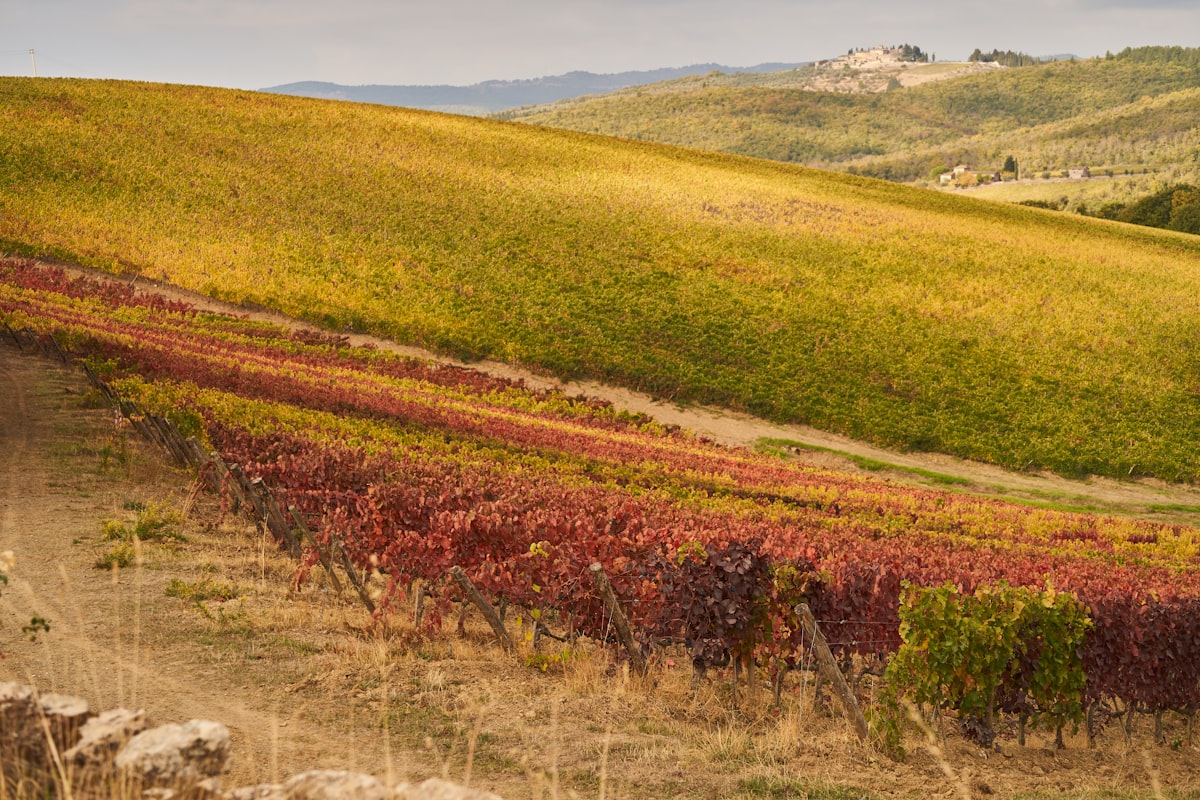
This is where wine gets interesting — understanding why the same grape tastes completely different depending on where it’s grown. This is the knowledge that separates someone who drinks wine from someone who understands wine.
The Climate Spectrum
Climate is the single biggest factor in determining a wine’s style. The same Pinot Noir grape will produce a completely different wine in Burgundy vs. Central Otago vs. California.
Cool Climate
- Examples: Burgundy, Mosel, Champagne, Willamette Valley, Marlborough, Chablis
- Wine style: Higher acidity, lower alcohol (11-13%), lighter body, red fruit (strawberry, cranberry), citrus
- Why it matters: Longer growing season = slower ripening = more complex flavors
Moderate Climate
- Examples: Bordeaux, Northern Rhône, Margaret River, Tuscany
- Wine style: Balanced acidity and fruit, medium body, moderate alcohol (13-14%), mix of red and dark fruit
- Why it matters: The “Goldilocks zone” — enough heat to ripen fully but enough cool to maintain structure
Warm Climate
- Examples: Barossa Valley, Southern Rhône, Mendoza, Priorat, most of Napa Valley
- Wine style: Riper fruit, softer acidity, higher alcohol (14-15%), fuller body, dark fruit (blackberry, plum)
- Why it matters: Sugar accumulates faster = higher potential alcohol
Hot Climate
- Examples: Central Valley (California), inland Spain, inland Australia
- Wine style: Very ripe fruit, minimal acidity, high alcohol (15%+), jammy character
- Why it matters: Good for volume production and fortified wines; challenging for elegant table wines
Understanding GDD (Growing Degree Days)
GDD measures heat accumulation during the growing season. The Winkler Scale is the standard classification for wine climates:
| Winkler Region | GDD (°F-days) | Climate | Examples |
|---|---|---|---|
| Region I | ≤ 2,500 | Cool | Champagne, Burgundy, Mosel |
| Region II | 2,501 - 3,000 | Cool-Moderate | Bordeaux, Willamette Valley |
| Region III | 3,001 - 3,500 | Moderate-Warm | Northern Rhône, parts of Napa |
| Region IV | 3,501 - 4,000 | Warm | Southern Rhône, most of Napa, Barossa |
| Region V | > 4,000 | Hot | Central Valley CA, inland Spain |
Each degree above 50°F (10°C) during the growing season counts as 1 GDD.
Drop this at dinner: “When someone says a wine has ‘good acidity,’ what they really mean is the grapes grew somewhere cool enough that they didn’t lose all their acid to ripening. Climate is destiny for wine.”
Terroir: The Complete Picture
Terroir (tehr-WAHR) is the French concept that wine expresses the total environment where grapes are grown. It’s not just one thing — it’s everything working together.
The components:
- Climate: Temperature, rainfall, sunlight hours
- Soil: Composition, drainage, mineral content
- Topography: Elevation, slope, aspect (which direction the vineyard faces)
- Microclimate: The specific conditions of an individual vineyard site
- Human element: Some include tradition and winemaking philosophy
Drop this at dinner: “Terroir is why a Pinot Noir from Burgundy tastes nothing like a Pinot Noir from Oregon, even though it’s the exact same grape. It’s the whole environment — soil, climate, elevation — expressed in the glass.”
Topography: Why Hills Matter
Elevation
- Higher altitude = cooler temperatures (roughly 0.6°C per 100m gained)
- More intense UV light = thicker grape skins = more color and tannin
- Examples:
- Mendoza (Argentina): 800-1,500m — altitude is the defining feature
- Priorat (Spain): 100-700m on steep slopes
- Willamette Valley (Oregon): 60-300m
Aspect (Which Way the Vineyard Faces)
- Northern Hemisphere: South-facing slopes get maximum sun exposure
- Southern Hemisphere: North-facing slopes get maximum sun exposure
- This can make the difference between grapes ripening or not in marginal climates (Burgundy, Mosel)
Slope
- Steeper slopes = better drainage, more sun exposure, better air circulation
- Also harder (and more expensive) to farm — often hand-harvested only
- The most famous steep vineyards: Mosel (Germany), Côte-Rôtie (France), Douro (Portugal)
Soil Types and What They Do
Soil affects drainage, heat retention, and how hard vines have to work for water. Stressed vines tend to produce smaller, more concentrated berries — and more interesting wine.
Gravel
- Characteristics: Excellent drainage, retains heat, stresses vines (low fertility)
- Where: Bordeaux Left Bank (Graves/Médoc), Châteauneuf-du-Pape
- Effect: Structured, concentrated wines
- Classic pairing: Cabernet Sauvignon, Merlot
Clay
- Characteristics: Retains water, cooler, more fertile
- Where: Bordeaux Right Bank (Pomerol, Saint-Émilion), parts of Burgundy
- Effect: Plush, rich, fuller-bodied wines
- Classic pairing: Merlot, Pinot Noir
Limestone / Chalk
- Characteristics: Excellent drainage, high pH, retains moisture underground
- Where: Burgundy, Champagne, Loire Valley, southern England
- Effect: Mineral-driven, crisp, elegant wines with good acidity
- Classic pairing: Chardonnay, Pinot Noir
Slate (Schiefer)
- Characteristics: Absorbs and radiates heat, steep sites, mineral influence
- Where: Mosel (Germany), Priorat (Spain)
- Effect: Intense, mineral-driven wines
- Classic pairing: Riesling, Garnacha
Granite
- Characteristics: Well-drained, low fertility, aromatic
- Where: Beaujolais, Northern Rhône (Côte-Rôtie, Hermitage), Douro Valley
- Effect: Aromatic, elegant wines
- Classic pairing: Gamay, Syrah, Touriga Nacional
Volcanic
- Characteristics: Mineral-rich, excellent drainage, unique flavor profiles
- Where: Mount Etna (Sicily), Canary Islands, parts of Oregon
- Effect: Distinctive mineral character, often smoky or ashy notes
- Classic pairing: Nerello Mascalese, Pinot Noir
Alluvial
- Characteristics: River-deposited sediments, nutrient-rich, fertile
- Where: Mendoza (Argentina), Rhône Valley, Languedoc
- Effect: Generous, fruit-forward wines
- Classic pairing: Malbec, Grenache
Drop this at dinner: “The Graves region in Bordeaux literally means ‘gravel’ in French. The soil drains so well that vines have to dig deep for water — and that stress is what makes the wine concentrated.”
Microclimates: The Local Weather
Coastal Influence
- Ocean breezes and fog cool vineyards near the coast
- Morning fog burns off by midday, giving grapes a cool start and warm finish
- Examples: Sonoma Coast, Casablanca Valley (Chile), Walker Bay (South Africa)
Rain Shadow
- Mountain ranges block moisture, creating dry conditions on the leeward side
- Winemakers control water through irrigation
- Examples: Eastern Washington (Cascades), Mendoza (Andes), Central Otago (Southern Alps)
Valley Floor vs. Hillside
- Valley floor: Warmer during the day, higher frost risk, more fertile soil
- Hillside: Cooler at night, better drainage, more sun exposure, less frost risk (cold air drains downhill)
Reading Wine Labels for Terroir Clues
What to look for:
- Appellation / Region: The more specific, generally the better the wine
- “Bourgogne” (broad) → “Gevrey-Chambertin” (village) → “Chambertin” (Grand Cru)
- Vineyard name: Single-vineyard wines emphasize terroir
- “Estate Grown” / “Mis en bouteille au domaine”: The winery grew and made the wine themselves
- Elevation or soil mentions: Increasingly common on New World labels
The Hierarchy Principle
In both Old and New World, more specific = (generally) higher quality:
- France: Regional → Village → Premier Cru → Grand Cru
- Italy: IGT → DOC → DOCG
- USA: California → Napa Valley → Oakville → single vineyard